

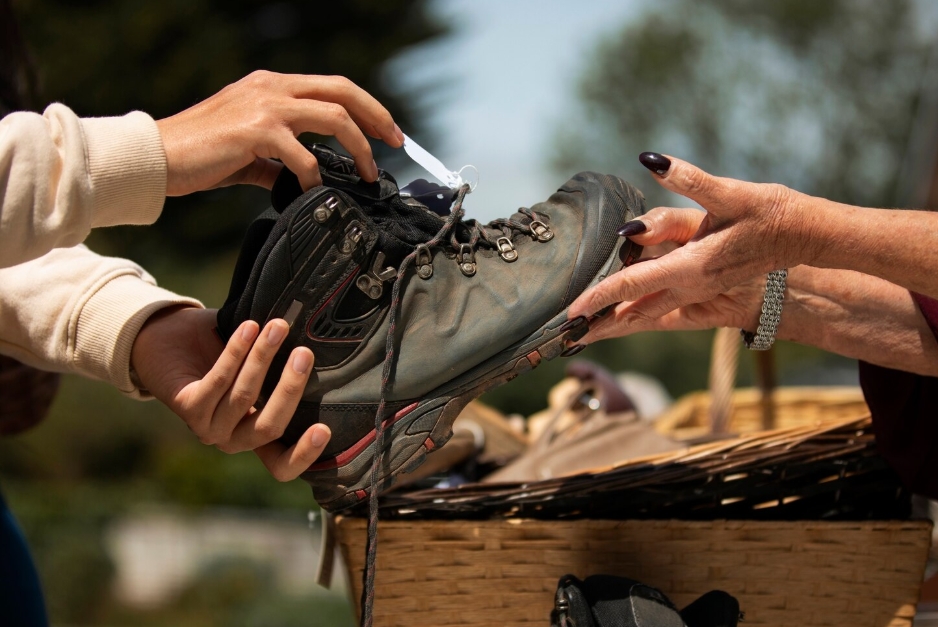
The world of footwear is in a major transition with the increasing opportunity for brands and manufacturers to look toward recycled, bio, and alternative materials. Consumer awareness, sustainability initiatives, regulatory changes, and the drive to use fewer resources are driving businesses to go beyond leather, virgin polyester, and synthetic materials.
But the procedure of changing upper material alters the way of sewing as well. The material that appears to be a material fit for a shoe can perform very differently when needle-penetrated, pulled on a thread, subjected to high speeds, flexed repeatedly, and exposed to environmental conditions. Accomplishing the stitching of recycled and alternative materials becomes significant for technical aspects in sustainable footwear manufacturing.
Whether it’s recycled polyester, regenerated textiles, plant-based materials, mycelium-based materials, recycled leather, or innovative synthetic alternatives, every material presents its own set of challenges when it comes to stitching. Manufacturers can gain sustainability and product performance by understanding such challenges and creating solutions that address the needs.
Understanding the Challenges of Alternative Materials
After many years of manufacturing experience, traditional shoe materials have set their sewing parameters. But other materials can be different thicknesses; have the same or different surface structure; be elastic; have different degrees of tear; and be heat sensitive.
Recycled materials may have non-uniform fiber structures due to the use of post-consumer or post-industrial waste. Some might be extremely soft, laminated, coated, or composite.
So it would be wise for manufacturers to assess before producing the following:
- Thickness and uniformity of the material
- The tensile strength and tear strength
- Stretch and recovery
- Tolerance for needle penetration
- Surface friction
- Heat sensitivity
- Flex-fatigue performance
- Compatibility with thread and adhesives
It is the first analysis that allows defining needles, threads, stitches, and machine settings.
Challenge 1: Inconsistent Material Structure
Recycled materials were known as one of the significant issues of material variation. Recycled fibers can vary in length, orientation, and strength, depending on the source and treatment history of the fibers.
Some of these inconsistencies can result in uneven stitching, weak seams, or penetration of the needle’s problem during stitching.
Solution
Districts should develop specifications for incoming materials and perform material tests on a batch-by-batch basis. Sewing trials should always be carried out when there is a notable difference in either the material type or source.
If control of material consistency is carried out at the start of manufacturing, it can reduce the defect rate at the end of manufacturing.
Challenge 2: Needle Damage and Perforation
There are some synthetic materials that are more readily pierced by needles, as opposed to traditional footwear fabrics. Loops of needles are constantly damaged, reducing the material strength, especially when placed too close.
This is particularly crucial with thin recycled fabrics, coated fabrics, and some bio-based fabrics.
Solution
The size of the needles and the places where they are being used must be maximized for the material. The size and density of needles and stitches should not be unnecessarily large on the manufacturer’s machine.
The goal is to make a clean stitch with no overperforation or rapture around the seam.
Challenge 3: Thread Selection
Strictly speaking, we can’t rule out using traditional threads for the move towards sustainability. However, thread selection is more critical as the thread needs to work well with this new material.
The thread is usually made of polyester or nylon for its strength, abrasion resistance, and sewing performance. Another benefit of recycled polyester sewing thread is that it can help meet sustainability goals provided the threads are performing as required by the footwear application.
Solution
The main trend for manufacturers should be to choose thread for performance first and for sustainability second—with the thread chosen being capable of sustaining expected loads.
Important properties include:
- Tensile strength
- Elongation
- Abrasion resistance
- Flex-fatigue resistance
- Moisture resistance
- UV resistance
- Chemical resistance
- Colorfastness
Using a sustainable thread that fails prematurely can undermine the overall sustainability of the footwear.
Challenge 4: Stitch Density and Seam Strength
Different stitch density may have different effects on alternative materials. Just as many stitches/unit length may not give seam performance advantages. Some materials can be made less stiff by excessive needle penetration, and if the stitching is not done, it can cause seams to open.
Solution
Manufacturers should optimize stitch density by experimental testing. Specification of thread size, stitch length, and seam construction should be subjected to tests for tensile strength, seam slippage, and repeated flexing.
In cases of extremely flexible shoes, the stitching alone should be sufficiently flexible while not becoming too stiff.
Challenge 5: Delamination and Layer Separation
There are a number of absorbent materials that form layers, coatings, or films or that have backing fabrics. Strength can be placed on these layers through sewing, and it might result in delamination.
It can worsen by repeated flexing around very stressed sections of the foot, notably around the “toe box” and the heel.
Solution
Manufacturers need to test the whole material construction rather than just the different layers of the material. When designing the product, the placement of the seams ought to be taken under consideration, and stitching should not be applied to locations where excessive stress would result in separation of the layers.
Challenge 6: Heat and Friction During High-Speed Sewing
When the sewing speed is high, there is friction generated between the thread, needle, machine, and the fabric. Recycled materials and/or bio-molded materials can have less heat resistance than the traditional materials.
Coatings may be damaged, synthetic layers may be distorted, or the performance of threads may be adversely affected by the excessively high temperatures.
Solution
Manufacturers can easily adjust sewing speed, select different-sized needles, perform maintenance on the equipment, and optimize the lubrication and finish of the sewing thread. Maintenance of the machine is recommended frequently, as damaged guides or tension elements increase the friction the more frequently the machine is used.
Challenge 7: Stitch Appearance
Sustainable materials may also possess unique surface properties and/or texture. The uneven stitches, puckering, or over-tight threads can reveal themselves very plainly and detract from the boots of high-quality footwear.
Solution
Manufacturers need to check the tension, number of stitches per inch, thread size, and sewing rate by doing several test runs to see which combination is ideal for each fabric. The operators should be trained to diagnose the material defects as well.
In some applications, there may be an advantage in further increasing the consistency being provided by automated sewing systems where production volume is high enough to make the investment worthwhile.
Design for Repairability and Durability
The material is not the only element of sustainability to consider. The lifetime of the product is also of crucial concern. The environmental advantages of shoes made with recycled materials or other types of non-wood materials can be diminished if they are not durable.
The seams must, therefore, be designed to have the expected life of the footwear. High-stress areas should be reinforced, and layers and unnecessary stitching should be avoided.
Repairability may also be planned for by designers by having access to critical seams, where necessary, to allow for repair.
Testing Alternative Materials
Testing is of vital importance before going to bulk production. It is important for manufacturers to consider the entire stitched assembly instead of evaluating the product material and thread alone.
Useful tests include:
- Seam tensile strength
- Stitch slippage
- Abrasion resistance
- Flex-fatigue testing
- Needle-hole resistance
- Environmental exposure
- Washing and moisture resistance
- Visual inspection after repeated use
It is also critical to conduct tests in a realistic environment, considering that shoes are repeatedly subjected to bending, stretching, compression, and friction forces during normal wear.
The Role of Technology
Advanced manufacturing and automated sewing techniques can buffer manufacturers against alternative material complexity. More consistent stitch length, positioning, and sewing parameters can be obtained with computer-controlled sewing machines.
Digital quality monitoring can also be used to help detect recurring defects and link this to machine, material batches, or production conditions.
This is a mix of materials and process control that can increase the predictability of the production of sustainable footwear.
Conclusion
Using recycled and alternative materials is of great interest to the shoe sector, but they will require competent technology, which keeps hand-stitching in check. While sewing, there may be difficulty resulting from the differences in consistency, strength, elasticity, sensitivity to heat, and construction of the surface of the material.
The answer is to view the entire situation of material, thread, needle, stitch density, machine settings, and seam construction as a complete machine system. Manufacturers can mitigate much of this with material testing, thread selection, stitch controls, and careful machine preventive maintenance, as well as thorough seam testing.
Sustainability in footwear is not just about the responsible materials used; it’s about sustainability, durability, comfort, performance, and longevity. With a custom design (polyester embroidery thread) of stitching processes specifically for recycled and alternative materials, the footwear manufacturer can shift the attention from sustainability as a material selection to a full product and manufacturing.


